


A crucial step in the planning phase of a commercial, institutional or municipal construction project is understanding the integration of mechanical, electrical and plumbing (MEP) systems. These systems dictate user comfort, safety and compliance.
It’s essential to get your building’s MEP systems right early on to ensure a successful handover at the end of the project. Discover how mechanical, electrical and plumbing systems integrate to make a building functional and safe.
MEP systems account for a significant portion of a building’s total cost. These are the most complex, energy-intensive components of a structure. Before you can uncover how the elements of mechanical, electrical and plumbing design interconnect to ensure comfort and safety, it’s essential to “zoom in” on each part to understand its role in the construction process.
Here are the building blocks of MEP design:
The mechanical scope of a project primarily consists of HVAC systems. Mechanical systems also provide the most opportunities for cost reduction through energy-saving measures.
Electrical components include lighting, power outlets, fire alarms, security systems and emergency power generation. Electrical design must account for proper load calculations and future-proofing to ensure safety and compliance.
Plumbing involves the safe delivery of clean water and the sanitary removal of wastewater and stormwater. Plumbing can also include specialized systems like medical gas or grease waste, and is a necessity for safety and hygiene compliance.
MEP design requires meticulous planning across several phases to ensure systems integrate early in the architectural process. Early collaboration between architects, engineers and owners ensures systems work together efficiently rather than competing for space and resources.
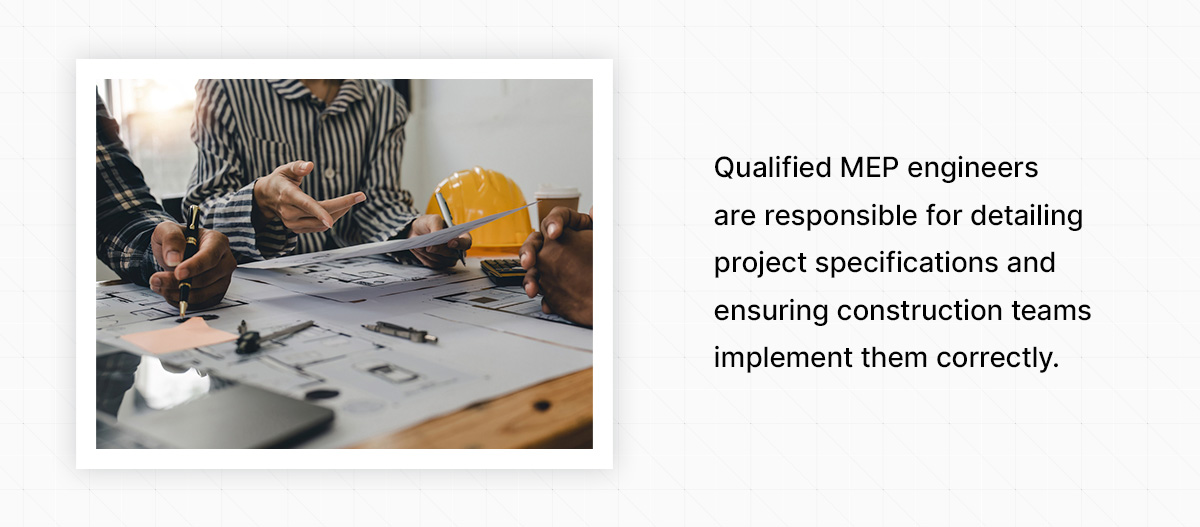
Qualified MEP engineers are involved in projects from the early planning phases. They’re responsible for detailing project specifications and ensuring construction teams implement them correctly.
Since MEP systems account for a large portion of the construction project, investing in high-quality MEP engineering services before construction commences prevents operational headaches, budget inflation and safety risks later on. Here’s why MEP design is a critical early phase step:
MEP systems must comply with strict local and international building codes to protect the health and safety of occupants. Proper MEP design prevents hazards such as electrical fires and poor air quality. With meticulous planning early on, MEP professionals ensure your projects meet new local energy codes to remain compliant and improve operational safety.
A well-planned MEP system should optimize energy use, resulting in long-term cost savings. While hiring engineering experts requires an initial investment, you can drastically reduce your building’s operational costs and utility bills in the long term by ensuring MEP systems integrate rather than compete for resources.
Modern MEP design incorporates eco-friendly and future-proof solutions, such as water-conservation techniques and low-impact materials, to reduce the building’s overall carbon footprint over time. These conservation measures reduce a building’s utility usage while promoting long-term sustainability.
Thanks to advancements in digital tools, the MEP industry is becoming more accurate and innovative in its building plans. Here are some of the most prominent technologies impacting the MEP engineering industry:
Architecture, engineering and construction (AEC) professionals use building information modeling (BIM) to create digital visualizations of a construction project, complete with intelligent data and specifications that promote efficiency throughout the project and across disciplines.
These virtual simulations allow engineers to coordinate trades and identify clashes. With advanced software, holistic data and cross-disciplinary collaboration, BIM is helping secure a more efficient and sustainable future for the AEC industry.
Engineers use the Internet of Things (IoT) to monitor a project’s performance in real time. Automated smart sensors continuously collect data to identify inefficiencies and reduce downtime.
Smart MEP automation optimizes energy consumption, reducing costs throughout the project. Additionally, the predictive maintenance capabilities of smart building automation increase project efficiency by detecting unusual equipment operation before it impacts productivity.
Your MEP consultant is a significant and crucial part of the construction process. Look for a firm with deep experience in the building type for your project, whether it’s commercial, institutional or municipal.
You also want your MEP design partners to demonstrate a holistic, multidisciplinary approach to ensure designs promote efficiency across all aspects and phases of your project. There’s also immense value in a hands-on firm that can adapt to client needs — make sure they’re always available and deal directly with you on your projects.

MEP design is a crucial element in the success of any construction project. The appropriate strategy for your building can enhance efficiency from start to finish and reduce operational costs with innovative resource management. MEP engineers can bring your project to life and ensure its safety and compliance.
Partner with an expert to find the best and most compliant mechanical, electrical and plumbing solutions for your build. CSI Engineering has decades of combined experience in project designs and construction administration. Contact us today to discuss your project needs. Take a look at the projects we’ve worked on and request a proposal for your project.