Mechanical vs. Electrical Engineering Services: What’s the Difference and Do You Need Both?
Mechanical engineering services for buildings focus on physical systems such as HVAC, plumbing and thermal management, while electrical engineering addresses power distribution, lighting and control systems.
Commercial building projects often integrate both disciplines for optimal coordination and outcomes. When these disciplines collaborate early, coordination conflicts decrease and operational efficiency improves.
What Mechanical Engineering Services Cover
Mechanical engineering services focus on systems that regulate the indoor environment, occupant comfort and essential utilities. Mechanical engineers balance performance, efficiency and maintainability.
Responsibilities vary by building size, function and operational requirements.
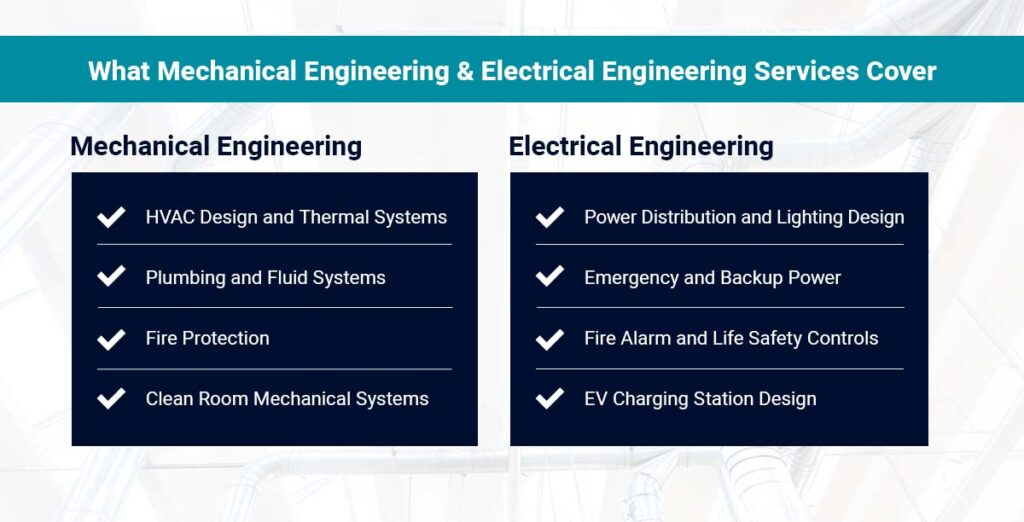
HVAC Design and Thermal Systems
HVAC design considers heating, cooling, ventilation and indoor air quality. Equipment sizing and system layout influence long-term performance and energy consumption:
Heating and cooling loads: Engineers calculate thermal requirements based on building size, occupancy and climate conditions.
Ventilation requirements: Proper airflow supports indoor air quality in offices and other commercial spaces.
System coordination: HVAC systems coordinate with electrical infrastructure and building controls to function properly.
Energy usage: Design decisions can significantly impact long-term performance and operating costs.
Plumbing and Fluid Systems
Plumbing engineering extends beyond water supply to include drainage, stormwater and specialty piping:
Water distribution: Supply lines deliver potable water to fixtures throughout the building.
Drainage and waste: Wastewater systems remove used water and comply with local codes.
Coordination needs: Plumbing layouts coordinate with architectural and structural elements during design.
Fire protection engineering is often provided alongside mechanical and electrical work on commercial projects. Engineers design suppression systems for code compliance:
Sprinkler systems: Water-based suppression provides coverage throughout occupied spaces.
System integration: Fire suppression can seamlessly integrate with other building services.
Clean room and laboratory environments demand precise environmental control, where even minor variations can greatly affect manufacturing or research outcomes:
Temperature and humidity control: Precise regulation maintains stable conditions for sensitive processes.
Airflow management: Controlled air movement prevents contamination and maintains required cleanliness levels.
Particle filtration: Advanced filtration removes airborne contaminants to meet specifications.
Interdisciplinary coordination: Clean room performance depends on both mechanical and electrical systems, making specialized environmental controls expertise critical for these complex environments.
What Electrical Engineering Services Cover
Electrical engineering services for buildings focus on safely delivering, distributing and controlling power throughout a facility. Electrical systems support both everyday operations and critical life functions. In practice, electrical designs anticipate future capacity and evolving technology needs.
Power Distribution and Lighting Design
Electrical engineers design systems that deliver reliable power from utility connections to building equipment. Lighting design considers functionality, energy efficiency and occupant experience:
Load calculations: Engineers calculate electrical loads to support current and future building demands.
Distribution panels: Main and subpanels organize circuits and protect against overloads.
Lighting layouts: Fixture placement and control strategies balance visibility with efficiency.
Power generation: Some projects incorporate on-site generation or backup systems. Commercial electrical system design accommodates these systems alongside utility service.
Emergency and Backup Power
Emergency power systems differ from normal electrical service in both function and code requirements. Backup power is essential for facilities where interruptions affect operations:
Generator systems: Standby generators provide power during utility outages.
Transfer switches: Automatic switches detect outages and shift loads to backup sources.
Battery systems: Uninterruptible power supplies (UPS) bridge the gap for critical equipment during power transitions.
Design requirements: System design depends on building function and continuity requirements.
Fire Alarm and Life Safety Controls
Fire alarm systems provide early notification and coordinate emergency responses. These systems communicate with other building systems:
Detection devices: Smoke detectors, heat sensors and manual pull stations identify fire conditions.
Notification appliances: Strobes and horns alert occupants to evacuate.
System coordination: Effective fire alarm system design integrates with building operations through close coordination between fire protection and electrical engineering teams.
EV Charging Station Design
EV charging design is a growing specialization. Estimates suggest that 30-40 million EVs may be on U.S. roads by 2030, making charging infrastructure a common building requirement:
Capacity assessments: Engineers evaluate existing electrical service before equipment selection.
Equipment costs: According to electric vehicle charging infrastructure data, Level 2 connectors typically cost around $3,500 per unit, while DC fast charging ranges from $38,000 to $90,000. Engineers must factor these costs into building plans.
Future expansion: Charging infrastructure should accommodate fleet or user growth where possible.
Code compliance: Site conditions, parking layouts and evolving building codes, including new EV-ready requirements, significantly influence design specifications.
Mechanical vs. Electrical Engineering Services
Both disciplines have complementary responsibilities, and many building systems benefit from their collaboration:
Type
Mechanical Engineering
Electrical Engineering
Focus
Heat, fluids and physical systems
Power, signals and controls
Building Examples
HVAC, plumbing, fire suppression
Lighting, panels, EV charging
Key Deliverables
Equipment layouts, duct schematics
Wiring diagrams, load calculations
Regulatory Focus
Applicable mechanical and plumbing codes
Applicable electrical and life safety codes
How Mechanical and Electrical Engineering Work Together
Mechanical and electrical engineering services frequently overlap. HVAC controls, building automation and fire protection systems benefit from coordination between both. In practice, coordination begins during design rather than after construction starts:
Equipment power requirements: Mechanical equipment needs electrical service sized correctly for the connected load.
Control systems: Building automation ties mechanical equipment to electrical controls and monitoring.
Space coordination: Equipment locations work for both mechanical routing and electrical access.
Reduced conflicts: Planning that accounts for both disciplines reduces issues discovered during construction.
HVAC accounts for approximately 35%-40% of commercial building energy consumption, and around 60% of large commercial buildings over 50,000 square feet have building automation systems (BAS). HVAC controls sit at the intersection of mechanical and electrical scope.
For most commercial building projects, both disciplines are essential. Smaller projects like lighting upgrades may only need one discipline. Consider the building type and work being performed.
Renovating a Historic Building
Older buildings often contain aging or undocumented building systems. Upgrades frequently balance preservation goals with modern performance standards:
Existing conditions: Aging equipment and outdated layouts influence both mechanical and electrical design decisions.
Code compliance: Bringing systems up to current standards while respecting historical integrity takes careful planning. Many firms follow historic preservation project practices during renovation work.
Coordinated upgrades: Most historic building projects involve multiple engineering disciplines because existing systems need to be evaluated together.
New School or Municipal Facility
Public buildings often include complex occupancy, accessibility and operational requirements:
Occupancy loads: Schools and municipal facilities serve many people and generally need robust mechanical and electrical systems.
Operational demands: Ventilation for occupied classrooms and adequate power for modern technology are among key school building engineering requirements that influence design.
Multiple disciplines: These projects typically involve mechanical, electrical, plumbing and fire protection engineering.
Utility coordination: Charging stations may need service upgrades that affect the building’s overall electrical capacity.
Site planning: Permitting, utility coordination and site work extend beyond the electrical connection.
Future considerations: Initial infrastructure design often accounts for future expansion.
Frequently Asked Questions
These questions help clarify when projects need one discipline or both.
Which Engineer Is Responsible for HVAC Design?
Mechanical engineers design HVAC systems. Electrical engineers provide the power distribution and controls that make those systems function.
Can One Firm Handle Both Mechanical and Electrical Engineering?
Yes, many engineering firms provide both services. This simplifies coordination and reduces the number of contracts project owners manage.
What Is the Difference Between MEP and M&E Services?
Mechanical, electrical and plumbing (MEP) services include plumbing system design alongside the other disciplines, whereas M&E refers to mechanical and electrical only.
How Do Mechanical and Electrical Engineers Collaborate on a Building Project?
Engineers from both disciplines review drawings together, coordinate equipment locations and confirm power requirements match the proposed electrical service.
Work With CSI Engineering for Your Project
CSI Engineering provides full mechanical, electrical, plumbing and fire protection engineering services across New England. We offer personalized attention and technical expertise, so you’ll work directly with our experienced engineers.