


It is an exciting time when you’re in the process of designing a brewery. There are many fun decisions to make, but you will also need to think critically about the mechanical, electrical, plumbing (MEP) and fire protection (FP) aspects of your facility. MEP design is crucial to your new brewery’s operations. Learn more about how to design a brewery safely with the right MEP plans here.
Without an effective MEP design for your brewery, you will encounter several obstacles and challenges over time. The right MEP design for your brewery provides many advantages:
When you consider where equipment and systems will be places and how that placement will affect operations, you can create a more streamlined process for your team. An optimized layout helps them work more efficiently, which is a significant benefit for your new business.
Keeping your brewery as energy-efficient as possible should be a top priority. MEP design supports that goal. For example, a properly designed system can recover waste heat from the brewing process for use in other areas, like heating water. Additionally, efficient lighting and HVAC systems, carefully selected and integrated through MEP design, can significantly reduce energy consumption.
An expert MEP design will take all of your brewery goals into consideration.
Whether you are building a microbrewery or creating a 10 BBL brewery layout, you have to consider how you will achieve your desired product quality. From your ingredient selection to the brewing method, many factors will affect quality. The MEP design of your brewery will be one of them. For example, by taking into account cleanliness needs, MEP design can ensure your brewery has sufficient hygiene and quality measures.
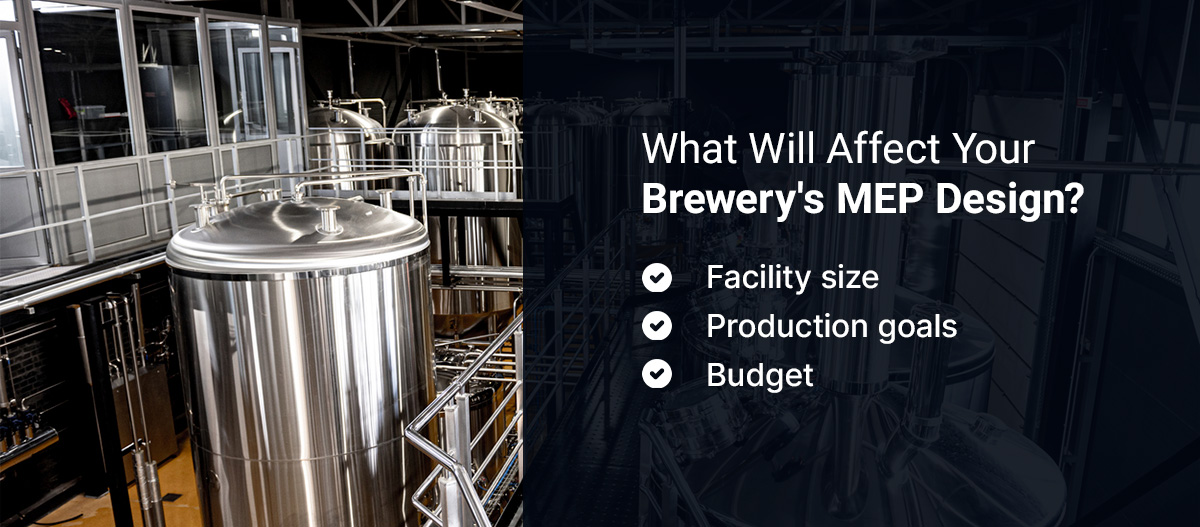
As you plan your brewery design, you’ll have to take certain factors into consideration to ensure it meets your needs. These factors include:
When creating MEP/FP designs for breweries, you will want to consider the following components.
One of the most important decisions you’ll have to make is which heating method you want to use for brewing. Typically, you will have one of three options — electric heating, steam heating or fire.
You and your staff must be able to carefully control the brewery’s temperature and humidity. This will allow you to maintain the best conditions for brewing. You will need an HVAC system that can consistently create and maintain this environment.
As an example, maintaining consistent temperatures during fermentation is crucial for consistent beer quality, and proper ventilation prevents the buildup of CO2. MEP engineers consider factors like equipment heat loads and insulation when designing these systems.
Plumbing plays a key role in any brewery. The nature and design of the plumbing system can affect nearly every aspect of production, from efficiency to quality. Your MEP design will cover which types of pipe you will use for various purposes, such as water transportation or heat transfer, as well as drainage.
Stainless steel pipes are often used for potable water and process lines due to their corrosion resistance and hygienic properties. MEP design also addresses wastewater treatment and disposal, ensuring compliance with environmental regulations.
Any place of business should have fire protection in place. With the high-temperature instruments and flammable material kept in close proximity, breweries often have notable fire risk. To reduce that risk and provide a fire plan, your MEP design plan should cover features like smoke detectors, fire alarms and fire suppression systems.
CO2 fire suppression systems are often preferred in breweries because they do not leave a residue that could contaminate the beer. MEP design includes the placement of fire extinguishers, sprinkler systems and emergency exits, all compliant with fire safety codes.
The MEP design process may vary from one provider to the next. Generally, it begins with a consultation, where the team will work to understand your goals, budget and other pertinent factors that may influence the process. Then, your partner will design your brewery’s MEP functions and assets. These designs will be shared with you so you can make changes you feel are necessary. Once you have approved the designs, you can move forward with building your brewery.

In order for your brewery to deliver its full potential, you need a reliable and experienced MEP design partner.
At CSI Engineering, we pride ourselves on our responsiveness and the attention we give to every client. These qualities allow us to provide a highly personalized MEP engineering brewery service that delivers the best possible results. This means an MEP design that is cost-effective, operationally efficient and tailored to your needs and goals.
To find out more about how CSI Engineering’s MEP/FP engineering design services can help you achieve your dream brewery, get in touch with us today.